
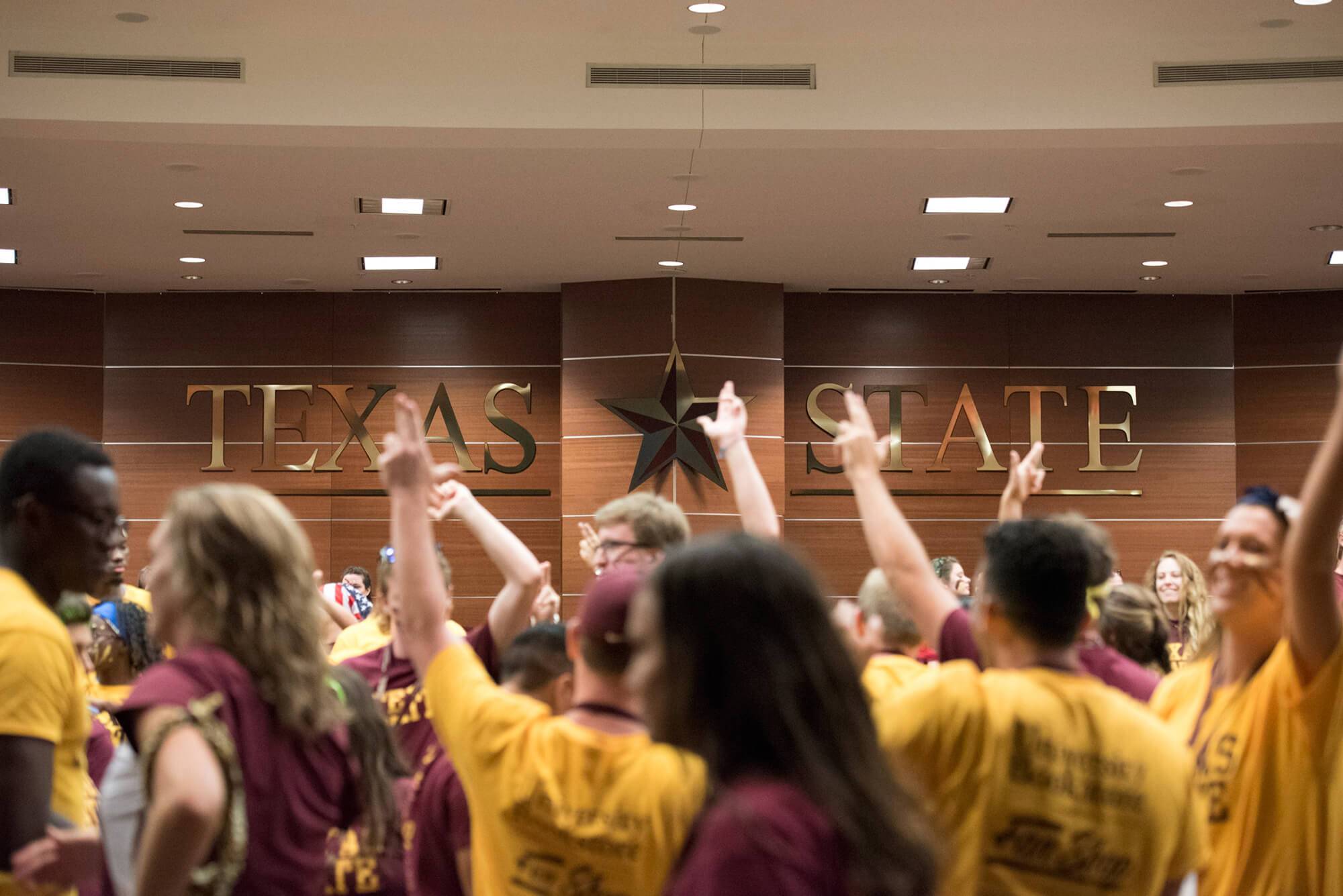
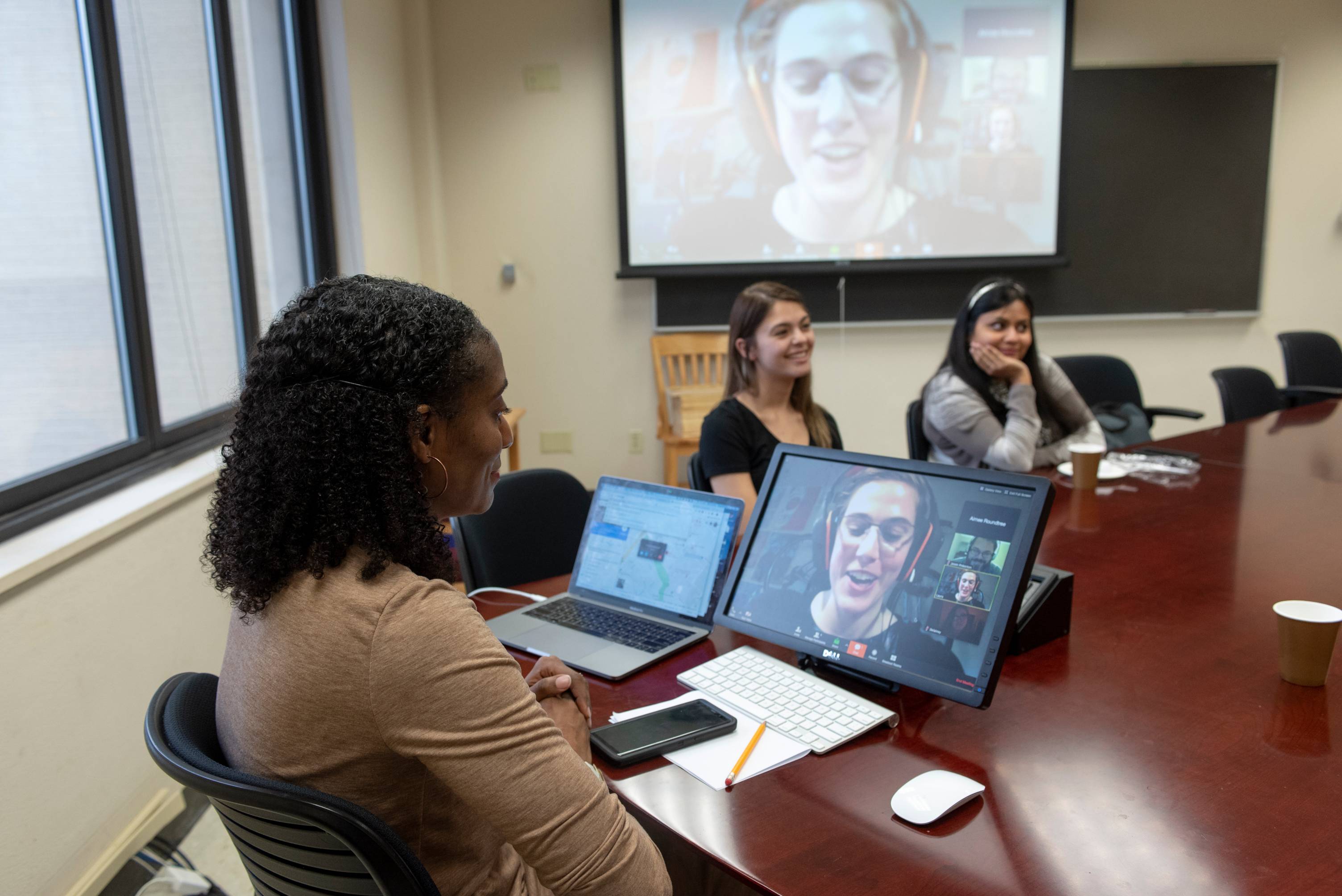
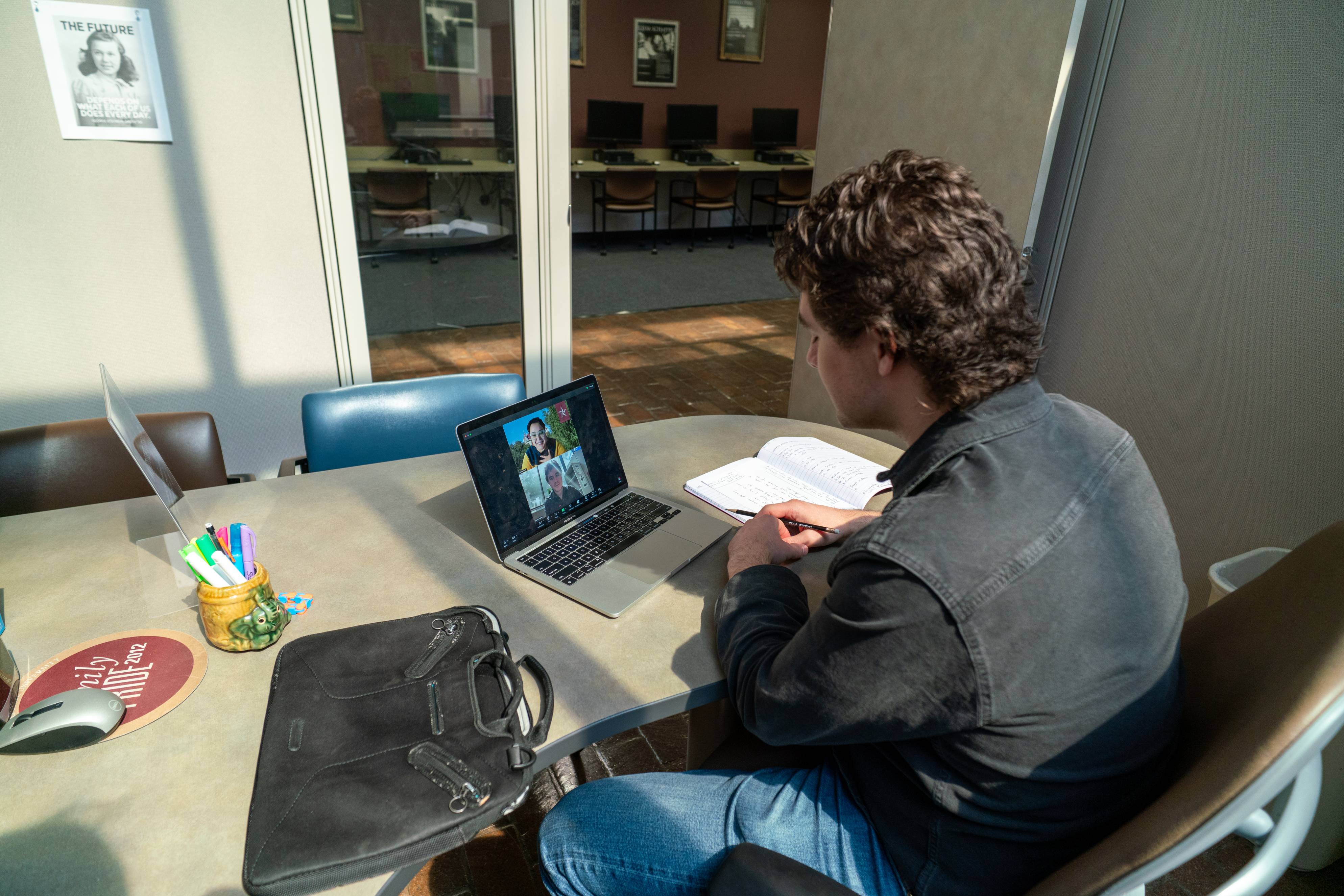
Collaborative Online International Learning (COIL) is an instruction method that connects universities in different countries to engage in shared online learning. Through COIL, two or more classes work together virtually to explore a topic, solve a problem, or create a product. Students gain intercultural experience without travel, and faculty build partnerships that enrich teaching and foster new scholarly and cultural perspectives. COIL is part of TXST’s commitment to experiential learning.
Why include COIL in a course?
Courses which incorporate COIL create dynamic learning spaces where students:
- Develop intercultural communication and teamwork skills
- Collaborate across time zones and cultural contexts
- Strengthen digital literacy and problem-solving abilities
- Gain global awareness within their academic discipline
- Participate in a high-impact practice that supports institutional goals for equity and internationalization
Faculty benefit by expanding professional networks, exploring comparative teaching methods, and contributing to innovative, globally connected curricula.
How COIL Works
A COIL project is typically embedded in an existing course and lasts 3–6 weeks. Partner faculty design shared activities that meet both courses’ goals. Common COIL elements include faculty collaboration, student interaction, and reflection. Each partnership is unique—projects may include virtual debates, design challenges, co-authored research, or storytelling.
Getting Started With COIL
Faculty interested in exploring COIL can begin with these steps:
- Identify a course that lends itself to global collaboration.
- Work with the EXC2EL Center to find an international partner or connect with existing institutional networks.
- Participate in COIL training or consultation to co-design your module and establish logistics.
- Pilot the COIL project and assess outcomes with guidance from our staff.
TXST COIL Course Examples
These examples show how global perspectives deepen disciplinary understanding in various disciplines:
- Fashion and Society (FM 2338) students in Texas collaborate with students in Saudi Arabia and Ukraine to reflect on dress habits and clothing consumption practices.
- Early Childhood Education (ECE 4300) classes in the U.S. and Mexico explore children’s interdisciplinary and intercultural learning.
Find COIL Resources from EXC2EL Center
Our resources include:
- Sample syllabi and project templates
- Reflection and assessment tools (e.g., AAC&U VALUE rubric for Intercultural Knowledge and Competence)
- Internal mini-grants and course development stipends for pilot projects
- Access to international partner networks through:
Contact us today for more information at exccelcenter@txstate.edu.